Which is better for self defense: martial arts, specialized tools, or situational awareness?
This is the most critical question you can ask when building a functional personal safety strategy.
Far too many people rely on a single approach, which leaves massive vulnerabilities in their everyday security.
Build Your Personal Defense Plan
Executive Summary
To survive a violent encounter, you must blend multiple disciplines. A tactical flashlight won’t help if you lack the mindset to draw it in time. A black belt in grappling is useless if you don’t spot the secondary attacker.
This guide breaks down the data behind awareness, tools, and hand-to-hand combat to help you formulate a realistic survival protocol.
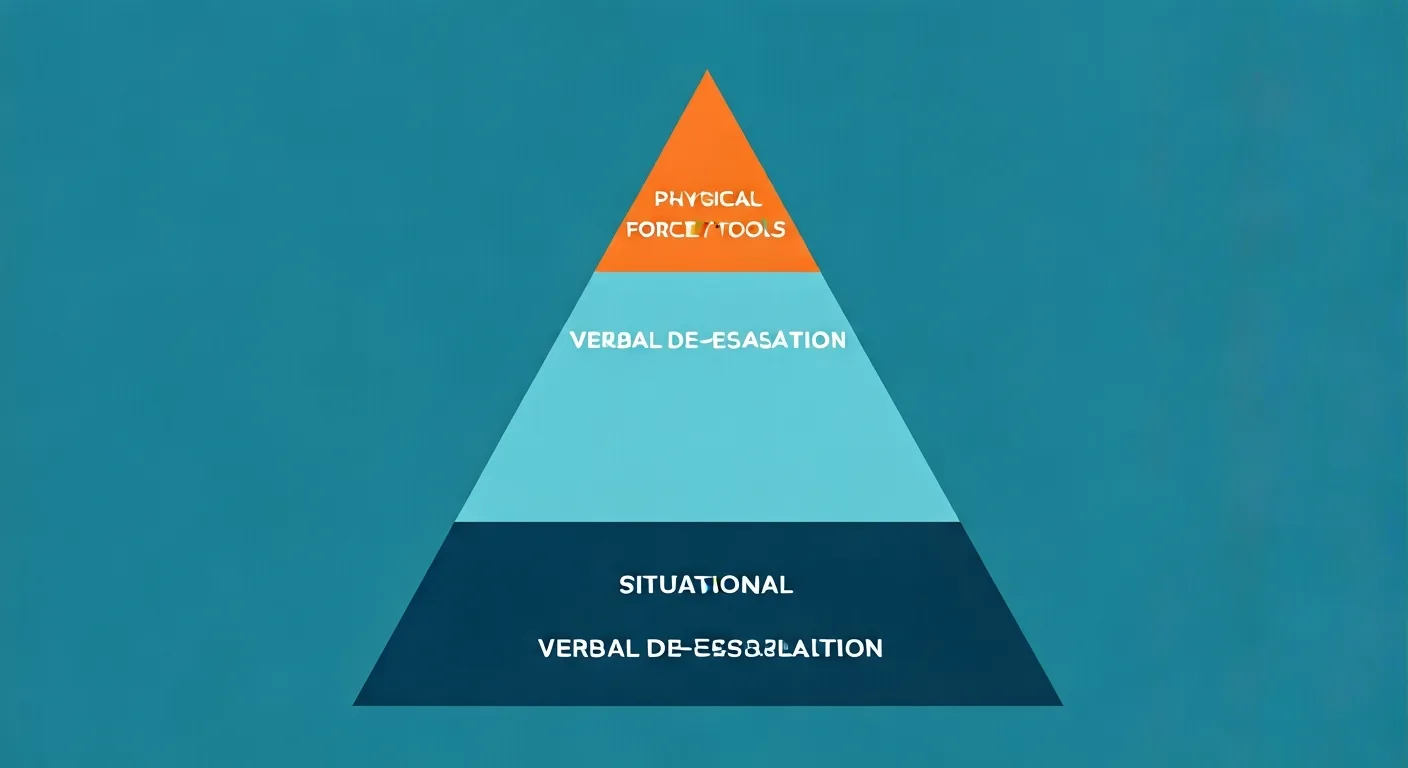
The Self-Defense Triangle: Why One Approach Isn’t Enough
Real violence is chaotic, unpredictable, and entirely unforgiving.
If you only carry a weapon, every problem looks like a nail.
If you only train in the gym, you may underestimate the variables of a street encounter.
A balanced approach integrates mindset, gear, and physical capability.
This holistic triad is the cornerstone of effective everyday carry self defense.
By overlapping your skills, you create safety nets that catch you when one strategy fails.
Awareness & De-Escalation: Your First Line of Defense
The greatest victory is the battle that never happens.
Situational Awareness is not about living in paranoia; it is about processing your environment efficiently.
By employing baseline situational awareness techniques, you can spot pre-attack indicators before the threat reaches you.
Look for concealed hands, unnatural pacing, and target glancing.
Once a threat is identified, verbal boundary setting becomes your primary tool.
Mastering de-escalation tactics allows you to talk down an aggressor while simultaneously maneuvering to a safe exit.
De-escalation is scientifically proven to save lives.
Real-world data on violent encounters indicates that successful verbal diffusion resolves up to 80% of potential conflicts without a single punch being thrown.
Martial Arts for Real-World Scenarios: Krav Maga vs. BJJ
When awareness fails and you are cornered, physical combat becomes mandatory.
However, not all gym skills translate to the concrete.
Many practitioners constantly debate the best martial arts for street fights.
The most common argument revolves around the dynamic of striking vs grappling.
If we look at krav maga vs jiu jitsu, we see two entirely different philosophies.
Krav Maga focuses on aggressive counter-attacks, groin strikes, and rapid escapes.
Brazilian Jiu-Jitsu (BJJ) excels in controlling an opponent once the fight hits the ground.
While BJJ is incredibly dominant in one-on-one scenarios, going to the ground in a street fight exposes you to multiple attackers.
Conversely, arts like Muay Thai teach devastating elbows and clinch work that can create enough space for you to sprint to safety.
Related: Which Martial Arts is Best for Self Defense? A Combat Comparison
Related: Is Boxing Good for Self Defense? The Knockout Truth Revealed
Self-Defense Tools: Pros, Cons, and Legal Liabilities
Sometimes physical strength and martial arts aren’t enough, especially against a larger attacker.
This is where non-lethal self defense tools bridge the gap.
When comparing pepper spray vs taser, each has distinct tactical advantages.
Pepper Spray can engage multiple targets from a distance and causes immediate involuntary eye closure.
Tasers offer neuromuscular incapacitation, but generally only give you one shot under extreme duress.
- Acts as a force multiplier against larger threats.
- Allows you to maintain physical distance.
- Requires less physical stamina than grappling.
- Can be taken away and used against you.
- Requires fine motor skills to deploy under stress.
- Subject to strict local carrying laws.
You must also intimately understand the legal use of force.
Specific legal precedents heavily favor those who attempt to retreat or use non-lethal tools before escalating the confrontation.
Jumping straight to Lethal Force without justification can result in severe criminal liability.
If you do choose to carry a firearm, understanding ballistics and control is non-negotiable.
Related: Is 9mm Good for Self Defense? Ballistic Performance Analysis
Related: Is 10mm Good for Self Defense? Power vs. Practicality
The ‘Reactionary Gap’ and Why Mindset Beats Muscle
Even the best tools are useless if you don’t have the time to deploy them.
The Reactionary Gap is the minimal distance required to perceive a threat and physically react.
If an attacker is within 21 feet, they can often reach you before you can draw a tool.
This harsh reality proves why real world scenario training is far more valuable than static target practice.
Through Scenario-Based Training, you inoculate your nervous system against the adrenaline dump of a violent encounter.
Static Training (The Trap)
Hitting heavy bags or paper targets builds mechanics, but it completely ignores the psychological terror of a screaming, moving adversary. It builds false confidence.
Dynamic Pressure Testing
Using padded suits and unscripted attacks forces you to make split-second decisions under extreme stress. It teaches you how to fight through the freeze response.
Creating Your Layered Personal Safety Strategy
Your ultimate goal is to build a defense matrix that scales with the level of danger.
Different environments require vastly different survival algorithms.
| Scenario | Primary Action | Optimal Tool / Skill | Risk Level |
|---|---|---|---|
| Aggressive Panhandler | Verbal De-escalation | Commanding Voice & Distance | Low |
| Street Mugging | Compliance / Escape | Pepper Spray / Sprinting | High |
| Close Quarters Ambush | Violent Counter-Attack | Krav Maga / Clinch Work | Extreme |
| Home Invasion | Barricade / Defend | Lethal Force / Police Call | Extreme |
Do not wait until you are a victim to realize your strategy was flawed.
Combine your situational awareness, invest in reliable tools, and train your body to react.
Upgrade Your Defense Plan Today
Frequently Asked Questions
Is running away considered self-defense?
Absolutely. Escaping the threat is always the most effective self-defense strategy. Avoidance guarantees survival, whereas engaging in physical combat always carries a risk of injury or legal consequences.
Can I learn self-defense from watching online videos?
While videos can introduce concepts and techniques, they cannot replace scenario-based training. You need a resisting partner to truly understand distance management and timing under pressure.
What is the easiest non-lethal tool to carry daily?
Pepper spray is widely considered the easiest and most practical everyday carry item. It is affordable, highly effective at creating distance, and legal in most jurisdictions.
Get our latest guides, news, and insights highlighted in your Google Search & AI Overviews.