When it comes to personal safety in an unpredictable world, one of the most urgent and heavily debated questions people ask is: which is better for self defense? With crime rates constantly in the news and personal security becoming a top priority for families and individuals alike, the market is absolutely flooded with options. From traditional martial arts like Brazilian Jiu-Jitsu and highly aggressive systems like Krav Maga, to non-lethal tools like pepper spray and tasers, all the way to lethal firearms, the choices can be incredibly overwhelming for a beginner.
But true self-defense isn’t just about the physical tool you carry in your pocket or the martial art you practice in a controlled gym environment; it’s a comprehensive, holistic mindset. It combines heightened situational awareness, calculated verbal de-escalation, and physical readiness to act under extreme stress. If you have ever wondered exactly how to defend yourself against an attacker effectively, you must first understand that there is no single “magic bullet” that guarantees your safety.
Instead, the most effective approach is building a layered defense strategy that is specifically tailored to your daily lifestyle, your physical capabilities, and the local laws of your jurisdiction. In this comprehensive, in-depth guide, we will meticulously break down the pros and cons of different self-defense methodologies. We will explore the complex legal and moral landscape of lethal vs non lethal self defense, directly compare pepper spray vs taser, and critically evaluate the best martial art for street fight scenarios by pitting Krav Maga vs BJJ. By the end of this article, you will be equipped with the knowledge to select the best self defense tools for women and men, and build a personalized personal safety plan that actually works in the chaotic reality of the real world.
There is no single “best” option for self-defense, as the ideal choice depends entirely on your environment, physical ability, and commitment to training. However, the ultimate foundation is always situational awareness and de-escalation. For non-lethal physical tools, pepper spray is generally considered the best option due to its long range, multi-target capability, and ease of use under stress. For physical combat skills, a hybrid of Krav Maga (for aggressive stand-up defense and weapon awareness) and Brazilian Jiu-Jitsu (for grappling and ground survival) provides the most realistic preparation. Ultimately, the best method is the one you actively practice and have readily accessible when danger strikes.
What Is the Best Approach to Self Defense?
The unending debate over what is better for self defense almost always misses the mark by focusing entirely on the physical altercation itself—the punches, the kicks, or the deployment of a weapon. In reality, self-defense is a comprehensive timeline of events, and the physical fight is the absolute last resort indicating that all previous preventative measures have failed. A robust and reliable approach to personal safety is built on three critical, interconnected foundational pillars: awareness, strategy, and tools. Understanding how these elements interact is the master key to surviving a dangerous encounter.
The first pillar, Awareness, is about avoiding the problem long before it escalates into a physical threat. If you see a potential threat from a block away, recognize the danger, and simply cross the street or enter a populated store, you have successfully defended yourself without ever throwing a punch. The second pillar, Strategy, involves how you handle a situation that is rapidly developing in front of you. This includes utilizing strong verbal boundaries, positioning yourself near physical exits, employing de-escalation tactics to calm an irate aggressor, and knowing exactly when to drop your ego and run away.
The third and final pillar, Tools, represents the physical application of force—whether that involves deploying physical self defense weapons, utilizing everyday objects as improvised weapons, or relying on your martial arts and hand-to-hand combat training. Relying solely on the third pillar is a recipe for disaster. Having the most advanced, expensive weapon in your pocket is entirely useless if you are ambushed from behind while staring down at your smartphone. In fact, carrying a weapon without the requisite situational awareness often leads to that very weapon being taken by the attacker and used against you. Furthermore, integrating simple personal safety devices, such as high-decibel personal alarms or tactical blinding flashlights, can serve as excellent early warning and deterrence systems, perfectly bridging the gap between awareness and physical force. The best approach is always holistic: train your mind to spot danger, train your voice to verbally de-escalate it, and train your body to fight fiercely as a last resort.
Pepper Spray vs. Taser: Which Non-Lethal Weapon Is Better?
When exploring the complex realm of non-lethal protective tools, the most frequent comparison drawn by security experts and everyday citizens alike is the battle of pepper spray vs taser. Both of these self defense weapons are highly popular, widely accessible in most states across the country, and highly effective when deployed correctly. However, they operate on fundamentally different physiological principles and have distinct tactical advantages, as well as notable limitations that you must understand.
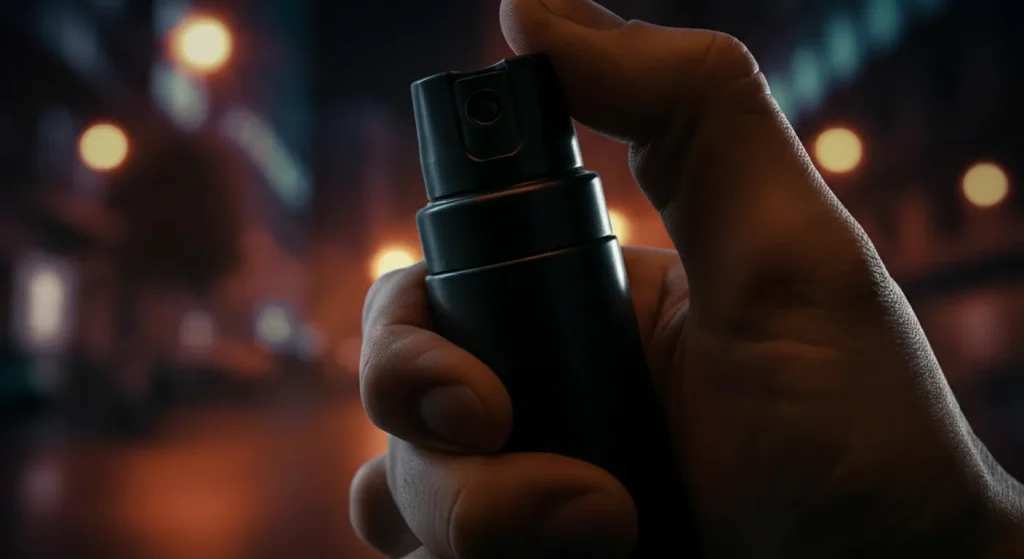
Let’s begin with Pepper Spray. The active ingredient in high-quality defensive pepper spray is Oleoresin Capsicum (OC), a powerful inflammatory agent that causes immediate, involuntary closure of the eyes, severe respiratory distress, uncontrollable coughing, and an intense burning sensation on the skin. The greatest tactical advantage of pepper spray is distance. A standard stream canister can reach an attacker from 10 to 15 feet away, allowing you to neutralize the threat long before they can physically lay hands on you. Additionally, pepper spray provides the capability to fend off multiple attackers simultaneously by sweeping the stream back and forth across their faces. It is highly affordable, easy to carry, and universally recognized as one of the best self defense tools for women, college students, and night-shift workers. However, it is not without drawbacks. Wind blowback can inadvertently contaminate you, and highly motivated attackers—especially those heavily under the influence of certain narcotics or experiencing a massive adrenaline dump—may occasionally fight through the pain momentarily.
On the other hand, the term Taser specifically refers to a projectile device that shoots two barbed darts into the attacker connected by thin wires. When these darts successfully connect, they deliver a powerful electrical charge that causes complete Neuromuscular Incapacitation (NMI). Unlike a traditional handheld Stun Gun (which is a drive-stun device requiring you to press it directly against the attacker’s body to cause localized pain compliance), a Taser completely overrides the attacker’s central nervous system. It locks up their muscles and causes them to fall to the ground instantly, regardless of their pain tolerance or whether they are under the influence of heavy drugs. This makes it incredibly effective. The major downside? You generally only get one shot. If one dart misses, or if both darts fail to penetrate thick winter clothing like a leather jacket, the device will not achieve NMI. Tasers are also significantly more expensive, bulkier to carry than pepper spray, and have stricter legal regulations in certain jurisdictions.
- Can engage an attacker from 10-15 feet away.
- Effective against multiple attackers with a sweeping motion.
- Highly affordable and inexpensive to replace after expiration.
- Small, lightweight, and incredibly easy to conceal in a pocket.
- Causes total neuromuscular incapacitation (NMI).
- Works regardless of the attacker’s pain tolerance or drug use.
- Often features a built-in laser sight for intimidating accuracy.
- Can be used as a backup contact stun gun if the darts miss.
Ultimately, while both are excellent non-lethal choices, pepper spray generally edges out the projectile Taser for the average civilian due to its lower cost, multi-target capability, ease of concealment, and the ability to purchase inert water canisters to physically test-fire and practice without spending a fortune on replacement electric cartridges.
Krav Maga vs. BJJ: The Best Martial Arts for Street Fights
If you prefer not to rely solely on external tools, or if you want to ensure you have the physical capability to retain your weapons if a close-quarters struggle ensues, investing time in a practical combat sport is absolutely essential. But trying to determine the best martial art for street fight scenarios is highly debated among experts. The two most prominent systems that frequently emerge in this heated discussion are Krav Maga and Brazilian Jiu-Jitsu. The great Krav Maga vs BJJ debate highlights two completely different philosophies of physical conflict resolution.
Krav Maga is a tactical combat and survival system originally developed for the Israeli Defense Forces (IDF). It is fundamentally not a sport; there are no rules, no referees to step in, no rounds, and no weight classes on the street. The core philosophy of Krav Maga is hyper-aggression: identifying the threat, inflicting maximum physical damage in minimum time, and escaping safely. Krav Maga specifically trains practitioners to bypass sporting rules and target the most vulnerable parts of the human anatomy—delivering groin kicks, eye gouges, throat strikes, and knee joint destruction. Furthermore, it incorporates realistic street scenarios into its daily curriculum, including how to defend against multiple attackers, how to perform weapon disarms against handguns, knives, and blunt objects, and how to fight in restrictive environments like a tight stairwell or seated inside a car. The primary criticism of Krav Maga within the martial arts community is that many civilian schools lack “alive” sparring; because you cannot safely practice an eye gouge at full speed against a resistant training partner, practitioners may develop a false sense of security and lack the crucial timing and pressure-testing found in competitive combat sports.
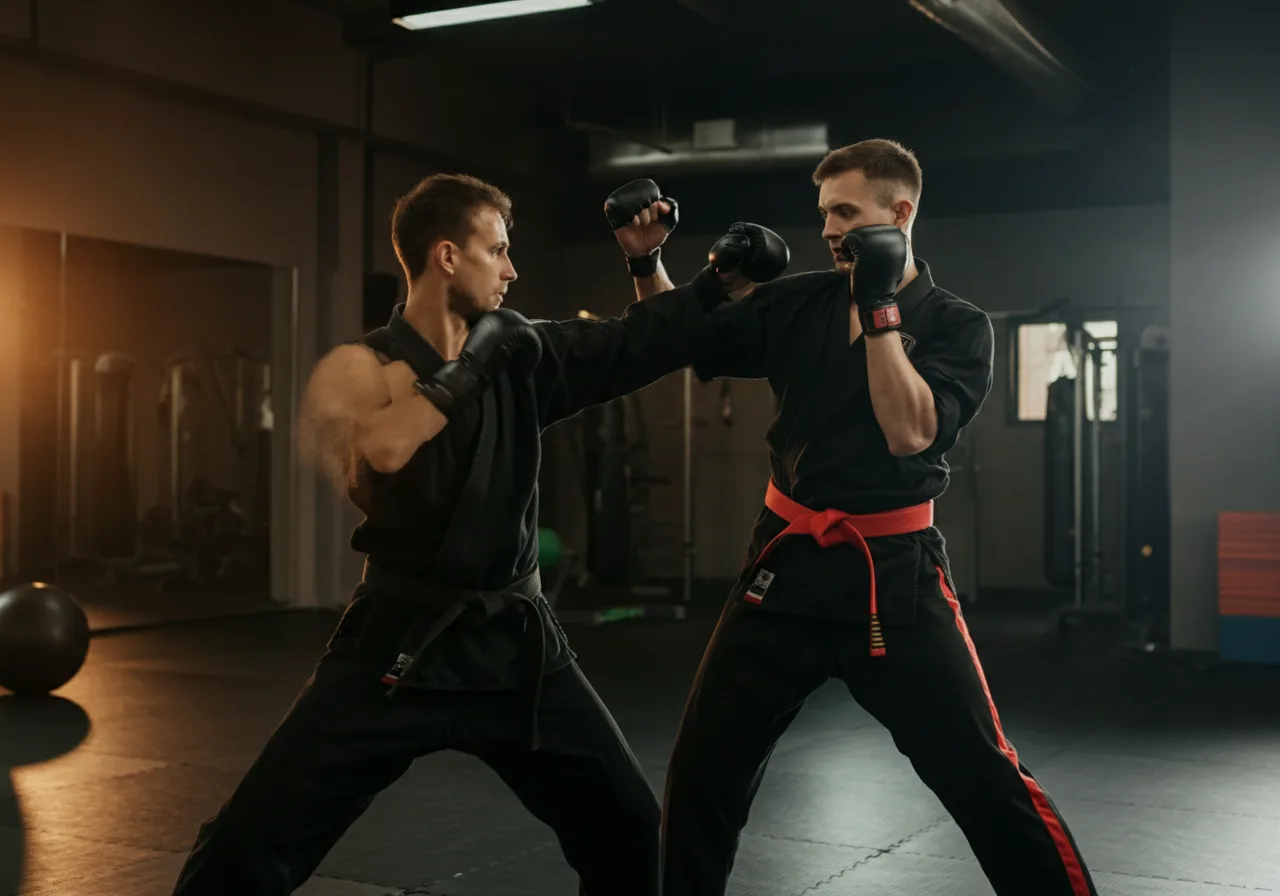
Brazilian Jiu-Jitsu (BJJ), on the other hand, is arguably the most effective martial art for one-on-one unarmed combat ever devised. Popularized globally by the Gracie family and the early, no-holds-barred days of Mixed Martial Arts (MMA), BJJ focuses almost entirely on taking the fight to the ground, grappling, positional control, and forcing an opponent into submission via brutal joint locks or blood chokeholds. The sheer magic of BJJ is its heavy reliance on leverage, body mechanics, and skeletal positioning, which allows a significantly smaller and weaker person to effortlessly control and submit a much larger, stronger attacker. Because BJJ relies on live sparring (known as rolling) at 100% resistance daily, practitioners develop incredible, unshakable composure under pressure. However, deliberately applying BJJ in a street fight carries severe, potentially lethal risks. Voluntarily going to the ground on hard concrete is inherently dangerous. Moreover, if your attacker happens to have a hidden knife in their pocket, or if they have friends nearby who decide to jump in and violently kick you in the head while you are busy applying a complicated armbar, your elite ground grappling skills could tragically become a massive liability.
So, which martial art is better for self defense? The most pragmatic, realistic answer is a dedicated combination of styles. Mixed Martial Arts gyms that teach elements of Muay Thai (for devastating standing elbow and knee strikes) alongside BJJ (for essential ground survival) offer incredible, unmatched pressure testing. Ultimately, you should learn Krav Maga for the aggressive, rule-free survival mindset and critical weapon awareness, but you must train BJJ to ensure that if you are inevitably knocked to the ground during a chaotic ambush, you know exactly how to sweep the attacker off of you, safely get back to your feet, and escape to safety.
Lethal Weapons: Is a Firearm the Right Choice for You?
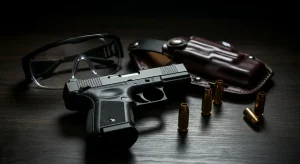
When discussing the ultimate, final spectrum of defensive force, the conversation inevitably turns to firearms and the heavy moral debate of lethal vs non lethal self defense. There is absolutely no denying the reality that a modern firearm is the ultimate force equalizer in human history. A 110-pound individual facing a 250-pound, highly aggressive, armed attacker has very few viable options for survival without a tool that instantaneously bridges the massive gap in physical strength and biological power. A firearm provides that necessary bridge, offering unmatched stopping power and the critical, life-saving ability to completely neutralize a deadly threat from a considerable, safe distance.
However, choosing to arm yourself with a lethal weapon requires acknowledging and accepting the massive, life-altering weight of the concealed carry pros and cons. The pros are incredibly evident and well-documented: it is mathematically the most effective means of stopping an imminent, unavoidable threat to your life or the lives of your beloved family members. Often, the mere presence of a legally drawn firearm is enough of a profound psychological deterrent to immediately end a violent encounter without a single shot ever needing to be fired.
The cons, however, are immense, complex, and lifelong. Carrying a firearm is a tremendous legal, moral, and financial responsibility that should never be taken lightly. If you are forced to draw a firearm and pull the trigger, you must be fully prepared to face severe legal scrutiny from law enforcement, potential criminal manslaughter charges from overzealous prosecutors, massive defense attorney fees that can bankrupt a family, and subsequent civil lawsuits—even if the defensive shoot was 100% legally justified. Furthermore, carrying a gun is not a magical talisman that wards off evil; it requires an unwavering, expensive commitment to ongoing tactical training. You must learn complex, perishable skills such as drawing rapidly from a concealed holster under extreme adrenaline, clearing mechanical weapon malfunctions in the dark, maintaining strict trigger discipline, and understanding close-quarters weapon retention techniques. If an attacker suddenly closes the distance and you lack proper retention training, your own firearm can be easily wrestled away and used against you. Ultimately, if you choose to integrate a firearm into your self-defense strategy, it must become a highly disciplined daily lifestyle choice rather than a casual, one-time purchase.
The Critical Role of Situational Awareness and De-escalation
Regardless of whether you are a heavily decorated black belt in BJJ, an expert competitive marksman, or armed with military-grade pepper spray gel, the absolute best self-defense strategy in existence is to never be involved in a physical altercation in the first place. The undeniable foundation of violent avoidance is robust, daily situational awareness training.
Situational awareness is not about living in a constant, exhausting state of paranoia; it is about living in a state of relaxed, conscious observation. The late firearms expert Col. Jeff Cooper famously developed the “Color Code” to explain these vital states of mental readiness to the masses:
- Condition White: Completely unaware, tuned out, and unprepared. You are staring down at your phone screen, wearing noise-canceling headphones, and completely oblivious to your immediate surroundings. This is exactly where predators look to find their easiest victims.
- Condition Yellow: Relaxed alert. You are off your phone, your head is on a swivel, you are actively noticing the people around you, scanning for exits when you enter a room, and generally paying attention to baseline behaviors. You should strive to live your entire life in public in Condition Yellow.
- Condition Orange: Specific alert. You have noticed something anomalous—a person acting aggressively, someone following you too closely to your car, or a potential threat materializing. You begin formulating a mental plan of action immediately.
- Condition Red: The threat is imminent and unavoidable. It is time to execute your mental plan, whether that is sprinting to safety, loudly deploying your personal alarm, drawing your pepper spray, or preparing to fight for your life.
Equally important to visual awareness is the lost art of De-escalation. A shocking number of violent encounters escalate rapidly from minor, ego-driven disputes—a bumped shoulder in a crowded bar, a stressful road rage incident, or a perceived verbal insult. In the realm of self-defense, your own ego is your greatest enemy. Utilizing verbal judo, maintaining a non-threatening “fence” posture (hands up near your face, palms open, ready to physically block but visually looking submissive to bystanders and security cameras), and simply apologizing and walking away from an irate, irrational individual is the smartest tactical move you can possibly make. It takes a much stronger, more disciplined person to swallow their pride and walk away from a screaming aggressor than it does to engage in a senseless, ego-driven street fight with unpredictable, potentially deadly consequences.
Legal Considerations When Defending Yourself
One of the most complex, yet fundamentally crucial, aspects of learning how to protect yourself is deeply understanding the severe legal ramifications of your physical actions. The complex laws governing civilian self-defense vary drastically depending on your country, state, and even local city ordinances, making it absolutely imperative to educate yourself on the specific statutes within your jurisdiction before you ever purchase a weapon.
The core, universal principle that governs almost all self-defense law is the concept of “reasonable and proportionate force.” You are legally permitted by the state to use the exact amount of force necessary to stop the immediate threat, and absolutely no more. If an unarmed, intoxicated person slaps you in the face, responding by drawing a lethal weapon and shooting them will almost certainly result in a lengthy prison sentence for murder or manslaughter. The use of lethal force is generally only legally justifiable when you have a reasonable, articulable, and immediate fear of imminent death or severe, crippling bodily harm (such as rape, kidnapping, or traumatic brain injury).
Furthermore, the deeply contested legal concepts of “Duty to Retreat” versus “Stand Your Ground” dramatically affect your legal standing in a courtroom. In a strict “Duty to Retreat” state, you are legally obligated to attempt to run away from an attacker if you can do so completely safely, before you resort to using lethal force. In a “Stand Your Ground” state, you generally have no legal obligation to retreat if you are in a place you have a lawful right to be. Even when employing non lethal self defense tools like pepper spray or a Taser, you can still face severe assault or battery charges if you use them preemptively, aggressively, or without proper legal justification. The harrowing aftermath of a self-defense encounter involves intense police interrogations, potential arrests, and crippling civil liability. Therefore, avoiding the fight entirely through awareness and de-escalation is not just a tactical physical victory; it is a profound legal and financial victory.
How to Choose the Right Self Defense Method for Your Lifestyle
Deciding precisely which is better for self defense is ultimately a deeply personal choice that requires honest, sometimes uncomfortable self-assessment. To truly choose the right method for your specific lifestyle, you need to build a personalized, layered defense plan that you can actually stick to.
Start by assessing your daily operating environment. Do you work late-night shifts in a high-crime urban area? Do you frequently take secluded public transportation? Do you park your vehicle in poorly lit, isolated parking garages? Your environment dictates the heightened level of readiness you need to maintain. Next, assess your physical abilities with brutal honesty. If you have mobility issues, a bad back, or simply lack the time and energy to commit to grueling, sweaty martial arts training three times a week, a reliable non-lethal tool like stream pepper spray paired with a high-decibel personal alarm is likely your most practical, effective option.
Finally, you must commit to continuous, realistic training. Purchasing a defensive tool and immediately throwing it into the deep bottom of a cluttered handbag or burying it in the center console of a vehicle provides nothing more than a dangerous, false sense of security. If you choose pepper spray, buy multiple inert practice water canisters and practice drawing and firing them quickly from the exact pocket you will carry them in. If you choose a martial art, attend classes regularly, ask questions about street application, and spar with actual resistance. The absolute best self-defense method in the world is the one you are legally allowed to carry, physically capable of using, and mentally prepared to deploy without a second of hesitation when your life is on the line.
🔍 You Might Also Be Interested In
Frequently Asked Questions
What is the best self defense tool for a beginner?
For absolute beginners with little to no physical training, pepper spray is widely considered the best non-lethal self-defense tool available. It is highly inexpensive, requires minimal tactical training to use effectively under stress, allows you to maintain a safe physical distance from an attacker, and is legal to carry in the vast majority of jurisdictions. Pairing pepper spray with a loud, attention-grabbing personal alarm is an excellent, low-barrier starting point for personal safety.
Is a stun gun or pepper spray better for runners?
For runners, pepper spray (specifically in a gel or stream format with an elastic hand strap) is significantly better than a stun gun. A stun gun requires you to be in extreme close-quarters, physical contact with the attacker to work, which is highly dangerous. Pepper spray allows a runner to deploy the defensive tool from up to 15 feet away without breaking stride, creating a massive opportunity to escape the immediate area and call law enforcement.
Can martial arts actually save you in a street fight?
Yes, functional martial arts can save your life, provided you are training in a realistic system that emphasizes live, fully-resistant sparring. Arts like Brazilian Jiu-Jitsu (BJJ), Muay Thai, Wrestling, and Krav Maga teach you invaluable skills such as how to manage distance, absorb impact, escape from underneath a heavier attacker, and control adrenaline. However, martial arts cannot overcome severe numeric disadvantages (multiple attackers) or entirely neutralize the threat of hidden lethal weapons like knives or firearms.
Get our latest guides, news, and insights highlighted in your Google Search & AI Overviews.