
Every day, we encounter messages that can make us question our worth, leaving many feeling unworthy or inadequate. “Never Let Anyone Make You Feel Unworthy – Embrace Your Value” serves as a powerful reminder to reclaim your self-esteem and confidence. This guide will help you recognize your intrinsic value and inspire you to stand tall against negativity, whether it’s from others or your inner critic. By embracing your unique strengths and acknowledging your worth, you can cultivate a positive self-image that empowers you to pursue your goals and dreams with enthusiasm. Join me as we explore practical steps and insights that will encourage you to celebrate your individuality and build a foundation of unshakeable self-worth. Your journey to embracing your value starts here-let’s dive in!
Recognize Your Inherent Worth
Recognizing your inherent worth is a vital step in embracing your value and living a fulfilling life. Everyone possesses an intrinsic dignity that is independent of external validation, circumstances, or opinions of others. This sense of worth isn’t something that needs to be earned; it exists simply because you are uniquely you. A powerful way to start acknowledging this worth is by reflecting on your unique qualities, skills, and experiences that contribute to who you are. For instance, consider moments where you succeeded in tasks that felt challenging or instances where you positively impacted someone else’s life-these memories reinforce that your existence has value.
To further reinforce your inherent worth, practice gratitude. Take a few moments each day to write down things you’re thankful for, especially focusing on personal traits and accomplishments. This practice can help shift your mindset from a scarcity focus, where you feel inadequate, to an abundance mindset, where you recognize the multitude of qualities that make you exceptional. You could jot down notes highlighting your resilience, kindness, or creativity. These reflections not only boost your confidence but also make it easier to ignore criticism or negative judgments from others.
Engaging in positive self-talk is another vital practice. It’s easy to get caught up in negative thoughts, which can overshadow our sense of worth. Challenge these thoughts by asking yourself whether they are true or simply a product of anxiety or past experiences. For example, if you catch yourself thinking, “I’m not good enough,” counter it with evidence of your accomplishments and strengths. You might say, “I’ve accomplished [specific achievement], which shows I’m capable.” This intentional reframing can significantly impact how you perceive yourself.
Lastly, remember that surrounding yourself with supportive individuals is crucial. Connect with those who uplift and encourage you. Seek out friends or communities that affirm your value and reflect the positive aspects of who you are. Engaging in supportive relationships can serve as reminders of your worth when self-doubt creeps in. Embracing your inherent value means actively choosing to recognize and celebrate who you are-an important step in fostering a resilient and fulfilling life.
The Impact of Negative Self-Talk
Negative self-talk can feel like a persistent shadow, often whispering doubts that undermine our self-worth. It’s a common struggle for many, manifesting through thoughts that spiral into feelings of inadequacy, self-doubt, and anxiety. Recognizing the damaging impact of this internal dialogue is crucial in dismantling its power and reclaiming our inherent value. Research shows that negative self-talk can lead to a range of psychological challenges, including depression and lower overall life satisfaction, proving that how we speak to ourselves significantly affects our mental wellbeing.
To combat negative self-talk, start by paying attention to your thoughts throughout the day. Whenever you catch yourself engaging in harsh self-criticism, pause and reframe those thoughts. A practical method is to replace negative statements with affirming ones. For instance, if you think, “I always mess things up,” counter with, “I’ve made mistakes, but I learn and grow from them.” This exercise not only challenges the validity of your negative thoughts but also encourages a kinder, more supportive internal voice.
Creating a daily practice of positive affirmations can further reinforce your self-worth. Set aside a few minutes each morning to articulate statements that celebrate your strengths and contributions. These could include phrases like, “I am worthy of love and respect,” or “I have unique talents that benefit others.” By regularly expressing these affirmations, you begin to shift your mindset, allowing positivity to replace the negativity that once dominated your thoughts.
Lastly, remember that the influence of negative self-talk can be mitigated by surrounding yourself with positivity. Engage with supportive individuals who uplift you rather than those who contribute to your negative perceptions. Building a network of empowerment is essential; as you hear positive reinforcement from others, it can further validate your worth and soften the harshness of your internal critic. Over time, as you practice these strategies, you’ll find that your self-talk becomes a tool for encouragement rather than a weapon of self-doubt.
Practical Strategies to Boost Self-Esteem
It’s essential to recognize that boosting self-esteem is a journey that demands ongoing effort and intentionality. To pave the way for a healthier self-image, consider implementing practical strategies that nurture your self-worth and promote a deeper appreciation for who you are.
One effective approach is to practice self-compassion. Instead of harshly criticizing yourself for mistakes, treat yourself with the same kindness you would offer a friend. If you find yourself falling short of a goal, try saying, “It’s okay; everyone makes mistakes, and I can learn from this.” This shift in perspective fosters resilience and helps to build a more positive self-view.
Another strategy is to engage in goal-setting. Break down larger aspirations into smaller, actionable tasks that can be accomplished over time. Celebrate each small win, no matter how trivial it may seem. For example, if your goal is to get fit, start with five minutes of daily exercise or choose a healthy snack instead of junk food. Each achievement adds to your sense of capability and self-assurance.
Moreover, incorporating mindfulness practices can significantly enhance your self-esteem by keeping you grounded in the present moment. Techniques such as meditation or deep-breathing exercises help reduce anxiety about the past or future, allowing you to appreciate your current self. Allocating just ten minutes each day to practice mindfulness can improve your overall outlook and appreciation for yourself.
Lastly, foster a positive environment by surrounding yourself with uplifting influences. Engage with friends and family who encourage and inspire you. Minimize time spent with individuals who drain your energy or make you feel inadequate. Remember, the company you keep can greatly influence your self-perception and overall well-being.
By incorporating these practical strategies into your life, you will gradually build a robust foundation of self-esteem, enabling you to embrace your inherent value and navigate life’s challenges with confidence.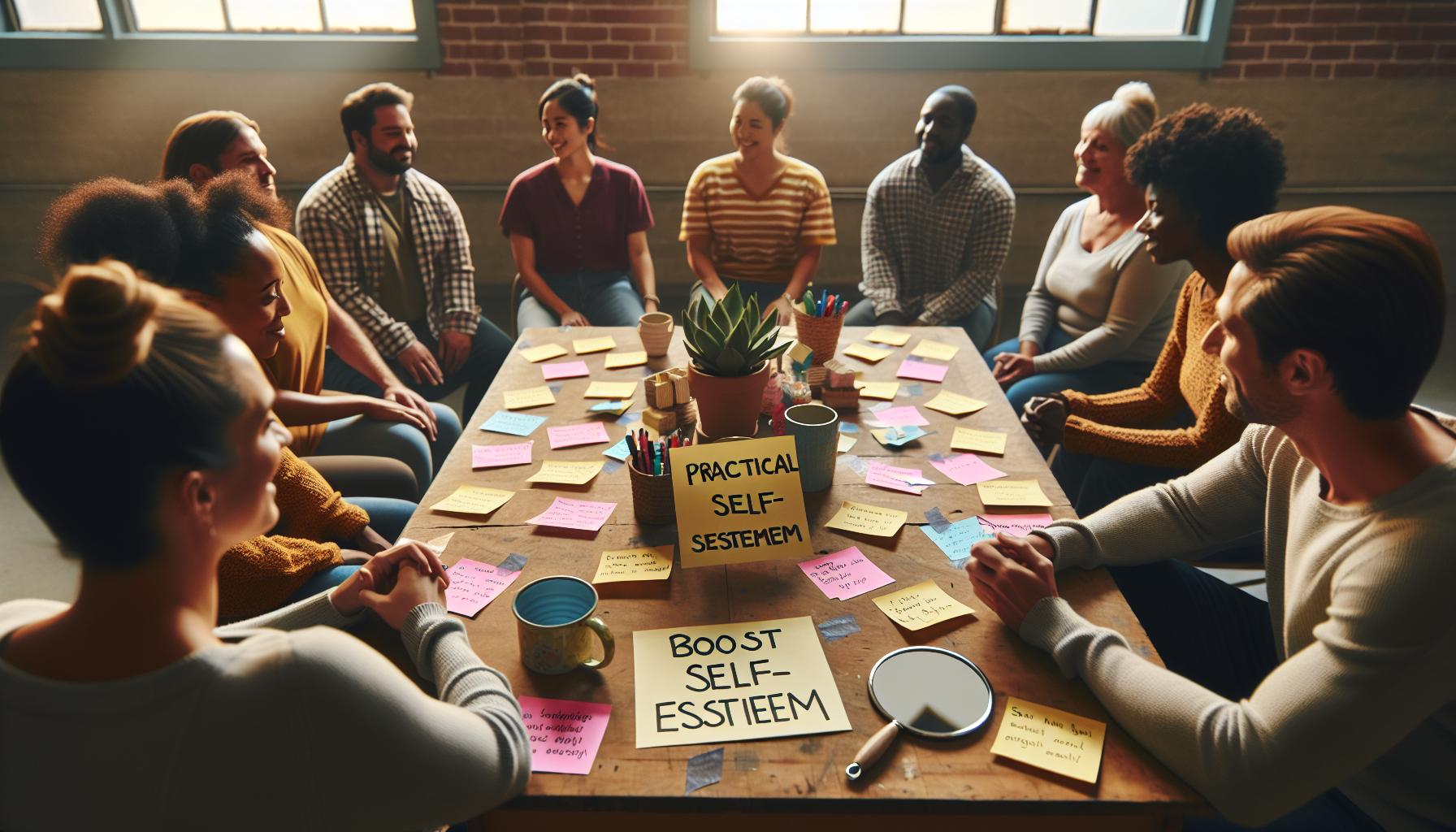
Surround Yourself with Positive Influences
Surrounding yourself with positive influences is crucial for cultivating a healthy self-image and reinforcing your sense of worth. The people we spend time with can either uplift us or bring us down. Surrounding yourself with supportive, encouraging individuals can significantly impact your self-esteem and overall well-being. Just as you would choose healthy food to nourish your body, selecting positive relationships serves to nurture your spirit.
Start by evaluating your current social circle. Make a conscious effort to engage with those who inspire you, whether they are friends, family, or colleagues. These are the people who celebrate your successes, encourage you during setbacks, and value you for who you are. In contrast, consider minimizing contact with those who are overly critical or bring negativity into your life. If a friend consistently makes you feel insecure or unworthy, it might be time to set some boundaries. Remember, it’s perfectly okay to prioritize your mental health by stepping back from relationships that drain your energy.
Creating a positive environment isn’t just about who you hang out with; it’s also about seeking out experiences that promote well-being. Attend workshops, join clubs, or participate in community events that align with your interests and values. Engaging with uplifting activities not only expands your social network but also provides opportunities to meet like-minded individuals who can further enhance your self-esteem.
Finally, remember that positivity is contagious. By embracing supportive influences, you can cultivate a more optimistic outlook on life. Share your own positive energy with others; empowerment often leads to a reciprocal relationship. When you uplift those around you, you reinforce your own self-worth, creating a supportive community that values everyone’s contributions.
In summary, intentionally surrounding yourself with positive influences fosters a healthier perspective on yourself, significantly contributing to your journey of embracing your inherent value.
Developing a Growth Mindset
Embracing the idea of a growth mindset can transform how you perceive challenges and your own self-worth. A growth mindset is the belief that abilities and intelligence can be developed with time, effort, and persistence. This perspective not only enhances your resilience but also empowers you to view failures as opportunities for growth rather than as reflections of your worth.
When faced with setbacks, remind yourself that they are a natural part of the learning process. For example, if you didn’t get the promotion you aimed for, instead of internalizing it as a measure of inadequacy, consider what skills or experiences you can develop to enhance your qualifications for the next opportunity. This shift in thinking fosters a more productive approach to self-evaluation, allowing you to focus on actionable steps rather than negative self-criticism.
To actively cultivate a growth mindset:
- Practice self-reflection: Regularly assess your thoughts when you encounter difficulties. Are you leaning towards a fixed mindset by thinking “I’m just not good at this”? Reframe such thoughts to align with growth, like “What can I learn from this situation?”
- Set realistic goals: Instead of aiming for perfection, establish goals that focus on progress. For example, if you want to improve your public speaking, set small targets such as practicing in front of friends or attending a workshop.
- Celebrate effort and progress: Acknowledge the efforts you put into a task, regardless of the outcome. Rewarding yourself for hard work reinforces the value of perseverance, aligning with your intrinsic sense of worth.
Embracing a growth mindset also allows you to seek feedback positively. Instead of viewing constructive criticism as a personal attack, see it as a tool for growth. Engage with mentors or peers who challenge you to improve and support you in your journey. Remember, the journey towards self-improvement is ongoing, and every small step is a victory worth recognizing.
In summary, adopting a growth mindset is key in your journey to feeling worthy and capable. It empowers you to view challenges as essential lessons rather than obstacles, fostering resilience and a deeper appreciation for your own inherent value.
Setting Healthy Boundaries for Self-Respect
To cultivate a sense of self-respect, setting healthy boundaries is essential. Boundaries are the invisible lines that protect your emotional and physical well-being, allowing you to express your values and needs without fear of judgment or undermining. Establishing these boundaries can help you navigate both personal and professional relationships more effectively, leading to interactions that support your self-worth rather than diminish it.
Creating healthy boundaries involves not only understanding where your limits lie but also communicating them clearly. Start by identifying what behaviors you find unacceptable and what situations make you feel uncomfortable. For example, if you notice that a colleague often interrupts you during meetings, it might be time to assertively express that you value being heard without interruptions. You can say something like, “I appreciate your input, but I’d like to finish my thoughts before we discuss.” Setting this boundary signals that your time and perspective are valuable.
Once you’ve identified your boundaries, implement them consistently. It’s important that you stick to your limits even when it’s challenging. This consistency reinforces your self-respect and shows others that you are serious about how you want to be treated. If someone crosses a boundary, address it immediately rather than letting resentment build. Use “I” statements to express how the behavior affects you and what you need instead, such as “I feel disrespected when my ideas are not acknowledged. I need us to take turns speaking.”
Additionally, remember that boundaries are not just about saying “no.” They also include knowing what to say “yes” to. Surround yourself with positive influences who respect your boundaries and encourage your growth. Engaging with supportive friends or family can reinforce your sense of belonging and worth, making it easier to maintain your boundaries.
In summary, setting healthy boundaries is a powerful way to honor your own self-respect and self-worth. It creates a space where you can thrive without the weight of other people’s expectations and negativity. By clearly communicating your limits and consistently upholding them, you send a message to yourself and to those around you that your needs matter, fostering a deeper sense of confidence and value.
Finding Purpose and Passion in Life
Finding your purpose and passion in life can be transformative, offering a profound sense of fulfillment and belonging. It’s important to remember that pursuing what you love isn’t just about ambition; it’s about rediscovering your innate worth and potential. Engaging in activities that ignite your passion can provide a powerful antidote to feelings of unworthiness.
To start your journey, reflect on what truly excites and motivates you. Consider the activities that make you lose track of time or the topics you could discuss for hours. Make a list of these interests and passions, no matter how unrelated they may seem at first. This process can help you uncover what resonates with your core values. Ask yourself questions such as: What do I enjoy doing? What am I naturally good at? When do I feel the most alive?
Once you’ve identified a few interests, take actionable steps to explore them further. This can be as simple as signing up for a workshop, participating in a community group, or dedicating an hour each week to dive deeper into your hobbies. Embrace the idea of experimentation-allow yourself to try new things without the pressure of mastery. As you explore, you might find an unexpected passion or even a career path that aligns with your values.
It’s also essential to recognize that your purpose can evolve over time. Life circumstances, experiences, and personal growth can shift your focus and interests. Embrace this fluidity and view it as a natural part of your journey. Engage in regular self-reflection to gauge your satisfaction and to continue aligning your actions with your passions.
Strong social connections are also important in finding and nurturing your purpose. Surround yourself with people who inspire and uplift you, whether they are friends, mentors, or community members. Their support can help you recognize your strengths and encourage you to pursue your passions without fear of judgment. When you connect with like-minded individuals, it fosters an environment where you can thrive and feel validated in your pursuits.
In summary, seeking out and engaging in your passions not only enriches your life but also reinforces your sense of worth. By taking small, intentional steps towards discovering what ignites your spirit, you cultivate a deeper appreciation for your unique value in this world. Remember, your journey is unique, and with patience and openness, you can find purpose that brings you joy and fulfillment.
Creating Affirmations to Reinforce Your Value
Crafting affirmations is a powerful way to reinforce your self-worth and counteract negative thoughts. A well-structured affirmation serves not only as a reminder of your value but also as a tool to reshape your mindset. By repeating positive statements about yourself, you can help reshape your brain’s perception of your worthiness. This practice encourages self-acceptance and serves as a shield against external judgments that might make you feel unworthy.
To get started, think about the qualities you admire in yourself or the strengths you possess. Craft statements that focus on these attributes. Here are a few examples to inspire you:
- I am deserving of love and respect.
- My worth is inherent and not based on others’ opinions.
- I bring value to every space I enter.
- I am enough just as I am.
When you create your affirmations, aim for positivity and present-tense language. This approach allows your mind to internalize these statements as truths rather than distant goals. For example, instead of saying, “I will be confident,” rephrase it to “I am confident.” Repeating these affirmations daily, especially in front of a mirror, can have a profound impact on your self-perception.
It’s also beneficial to write down your affirmations in a journal or display them where you can easily see them throughout the day. This visibility serves as a constant reminder of your worth. Some people find it helpful to pair affirmation practice with other self-care routines; for instance, reciting affirmations while doing your morning skincare can reinforce a positive start to your day.
Incorporating affirmations into your daily routine is not just about repeating words; it’s about fostering a mindset shift that aligns with your inherent value. With consistent practice, these positive statements can help combat negative self-talk and boost your self-esteem. Remember, affirmations are not magical solutions but rather tools that encourage you to embrace the truth of your value – a truth that can never be diminished by anyone else’s perception.
Overcoming Comparison Culture
In today’s world, it’s easy to fall into the trap of comparison, especially with social media amplifying the allure of seemingly perfect lives. It’s essential to recognize that every person faces their own challenges, even if they don’t broadcast them online. When you scroll through curated images and achievements of others, remember that this snapshot of life often doesn’t reflect the full story. Learning to celebrate your journey, irrespective of how it stacks up against others, is a powerful way to overcome the comparison culture that can chip away at your self-worth.
One effective strategy to combat this mindset is to limit your exposure to social media and instead focus on what truly enriches your life. Take breaks from platforms that induce feelings of inadequacy and replace that time with activities that promote your well-being. Engaging in hobbies, reading, or spending time in nature can reinforce your individuality and remind you of your unique qualities. Additionally, consider curating your social media feeds to include only positive influences-people and accounts that inspire you rather than make you feel less than.
Moreover, practicing gratitude can help shift your perspective. Start a daily gratitude journal where you jot down things you appreciate about yourself and your life. This simple act can retrain your brain to focus on your strengths rather than comparing them to others. Reflecting on your accomplishments, no matter how small, fosters a sense of self-assurance and promotes a healthier self-image. Over time, this practice can help diminish the comparison reflex.
Lastly, surrounding yourself with supportive and uplifting individuals who celebrate your successes can greatly enhance your self-esteem. Seek out friends or communities that empower you rather than diminish your worth. Engaging in meaningful conversations and shared experiences can help reaffirm your value and remind you that you are not alone in your struggles. By investing in relationships that build you up, you learn to embrace your own worth without the hindrance of comparison.
Embracing Vulnerability for Authentic Connections
Opening up and being vulnerable can feel daunting, yet it is a vital step toward building authentic connections with others. When we allow ourselves to be seen-flaws and all-we create a space that fosters trust and understanding. Vulnerability isn’t about oversharing or revealing everything at once; rather, it’s about sharing our true selves in a way that encourages openness from others. This mutual exchange can significantly enhance the quality of our relationships and help us feel more connected.
To embrace vulnerability, begin by recognizing that everyone has insecurities and struggles. Sharing a personal story or a challenge you’re facing can be disarming and relatable, allowing others to feel safe in reciprocating. This could mean discussing everyday challenges like work stress, family dynamics, or even personal fears. For example, when you talk about what worries you or what you’re striving to improve, it creates a bond based on shared experiences. Such conversations not only strengthen connections but also remind you that you are not alone in your experiences.
Another powerful aspect of vulnerability is its role in self-acceptance. By allowing yourself to feel vulnerable, you acknowledge and accept all parts of yourself. To practice this, consider starting small-share something personal in a comfortable setting, such as among close friends or in a supportive community group. This can be as simple as admitting you don’t have all the answers or that you’re struggling with a decision. Over time, this practice can build your confidence and comfort in being authentic.
Additionally, surround yourself with individuals who exemplify vulnerability themselves. Observe how they share and connect, and don’t hesitate to lean into those relationships that feel safe. Building genuine connections with open-hearted people not only reinforces your value but also reminds you of the importance of community. When you feel supported by those around you, it empowers you to embrace your true self without fear of judgment. Ultimately, vulnerability paves the way for deeper, more fulfilling relationships and strengthens your sense of worth in both yourself and the community around you.
Seeking Professional Support When Needed
Reaching out for professional support is a powerful step in recognizing your inherent value and overcoming feelings of unworthiness. Many people experience periods of doubt and low self-esteem, and seeking help can provide the tools and insights needed to reclaim your sense of self. Whether it’s through therapy, coaching, or support groups, professional guidance can help illuminate paths to empowerment and self-acceptance.
Therapists, for instance, can offer a safe space to explore your feelings and challenge negative self-talk. A cognitive-behavioral therapist might help you identify patterns of thinking that are detrimental to your self-image. By equipping you with strategies to reframe these thoughts, they can foster a healthier mindset. If you’re unsure where to start, consider asking for recommendations from friends or searching for local practitioners online. Many therapists offer initial consultations that can help you determine if their approach resonates with you.
In addition to individual therapy, support groups can be beneficial in building community and connection. Sharing your experiences with others who are facing similar struggles can provide a sense of solidarity and belonging. Many find that simply knowing they’re not alone in their feelings is incredibly reassuring. You can look for local groups focused on self-esteem, personal development, or specific issues you might be facing, such as anxiety or depression.
Key Takeaways:
– Professional support can provide essential tools to reclaim your self-worth.
– Therapy offers a structured space to confront and reframe negative beliefs.
– Support groups foster community and understanding, reminding you that you are not alone.
By taking this brave step, you’re opening the door to deeper self-discovery and a reaffirmed sense of your own value. Remember, seeking help is not a sign of weakness, but a courageous act of self-love that can lead to profound personal growth.
Cultivating Resilience Through Challenges
In times of difficulty, cultivating resilience can significantly transform how we perceive our self-worth. Resilience is not just about bouncing back; it’s about adapting and growing through challenges. When faced with setbacks, whether personal or professional, it’s vital to recognize that these experiences can enhance our sense of value rather than diminish it. Embracing challenges as opportunities for growth fosters a deeper understanding of who we are and reinforces the belief that we are inherently worthy.
To build resilience, start by reframing how you view obstacles. Instead of seeing them as roadblocks, consider them stepping stones that can teach essential life skills. For instance, if you encounter criticism at work, use it as feedback to improve your performance rather than a blow to your self-esteem. Acknowledging that growth often stems from discomfort helps to cultivate a mindset that appreciates every experience as a lesson in self-discovery.
Practical Steps to Build Resilience
- Practice Self-Compassion. Treat yourself as you would a good friend. When you’re facing challenges, remind yourself that it’s okay to struggle and that this doesn’t define your worth.
- Set Realistic Goals. Break your challenges into manageable steps. Achieving small, realistic goals can create a sense of accomplishment and reinforce your self-worth.
- Engage in Reflective Journaling. Writing about your experiences and feelings can clarify your thoughts and help you process emotions positively. Consider jotting down moments you felt proud or times you’ve overcome difficulties.
- Utilize Support Networks. Don’t hesitate to lean on friends, family, or support groups during tough times. Sharing your feelings can lessen the burden and remind you that you are not alone in your struggles.
Additionally, developing a growth mindset is essential for enhancing resilience. This perspective shifts the focus from fear of failure to an appreciation of learning and improvement. Instead of feeling defeated by failures, view them as integral parts of the growth process. Celebrate your strengths and recognize that mistakes are valuable lessons that can guide you on your journey.
In summary, resilience is a powerful asset that enhances your self-worth by teaching you that every challenge is an opportunity for growth. By adopting a positive outlook, practicing self-compassion, setting achievable goals, reflecting through journaling, and leaning on supportive connections, you can build a robust internal foundation that recognizes your inherent value. Remember, your worth does not fluctuate with circumstances; it remains constant, waiting for you to embrace it fully.
FAQ
Q: How can I overcome feelings of unworthiness?
A: To overcome feelings of unworthiness, start by recognizing your inherent value. Practice self-compassion, challenge negative self-talk, and develop healthy coping strategies. Surround yourself with positive people and engage in activities that celebrate your strengths. For more practical strategies, refer to the article section on boosting self-esteem.
Q: What are the signs of low self-esteem?
A: Signs of low self-esteem include persistent negative thoughts about oneself, difficulty accepting compliments, excessive self-criticism, and a fear of failure. These feelings can hinder personal growth. Identifying these signs is the first step toward embracing your value and building self-worth.
Q: Why is self-worth important for mental health?
A: Self-worth is crucial for mental health as it influences how you view yourself and your relationships. A strong sense of self-worth leads to healthier boundaries and better emotional resilience. Fostering a positive self-image can help combat anxiety and depression, leading to overall well-being.
Q: How do I set healthy boundaries to improve self-respect?
A: To set healthy boundaries, identify what makes you uncomfortable and communicate your limits clearly to others. Learn to say no when needed, and prioritize self-care. This fosters respect for yourself and encourages others to value your needs. The article contains more insights on establishing boundaries.
Q: What are effective affirmations to enhance my self-worth?
A: Effective affirmations to enhance self-worth include statements like “I am deserving of love and respect” and “I embrace my uniqueness.” Repeating these affirmations daily can help reinforce a positive self-image and combat negative thoughts. Creating personalized affirmations can further enhance their effectiveness.
Q: When should I seek professional help for feelings of unworthiness?
A: Seek professional help when feelings of unworthiness persist and negatively impact your daily life, relationships, or mental health. A therapist can provide strategies tailored to your needs and help you work through deep-seated issues affecting your self-esteem.
Q: How does comparison culture affect our perception of self-worth?
A: Comparison culture can create unrealistic standards, leading to feelings of inadequacy and lowered self-worth. It’s essential to focus on your personal journey and celebrate your achievements rather than comparing yourself to others. The article discusses overcoming comparison culture in detail.
Q: Can vulnerability improve my self-esteem?
A: Yes, embracing vulnerability can enhance self-esteem by fostering authentic connections with others. Sharing your true self creates deeper relationships and allows for mutual support. This openness can help you feel valued and appreciated, which is essential in recognizing your worth.
Future Outlook
Remember, embracing your value is an ongoing journey, and by recognizing your worth, you empower both yourself and those around you. Don’t let self-doubt overshadow your potential-take the first step today! If you’re eager to explore more wellness tips, check out our articles on boosting self-esteem and setting healthy boundaries.
Engage with our community by sharing your thoughts or tips in the comments below, and consider signing up for our newsletter for regular insights that nurture your journey to self-acceptance. You deserve to thrive, so take action now and transform how you see yourself. Keep exploring, keep growing, and never let anyone diminish your worth!
Get our latest guides, news, and insights highlighted in your Google Search & AI Overviews.